
Castagnaccio
This unusual chestnut dessert blends sweet and savory notes, with delicious results.

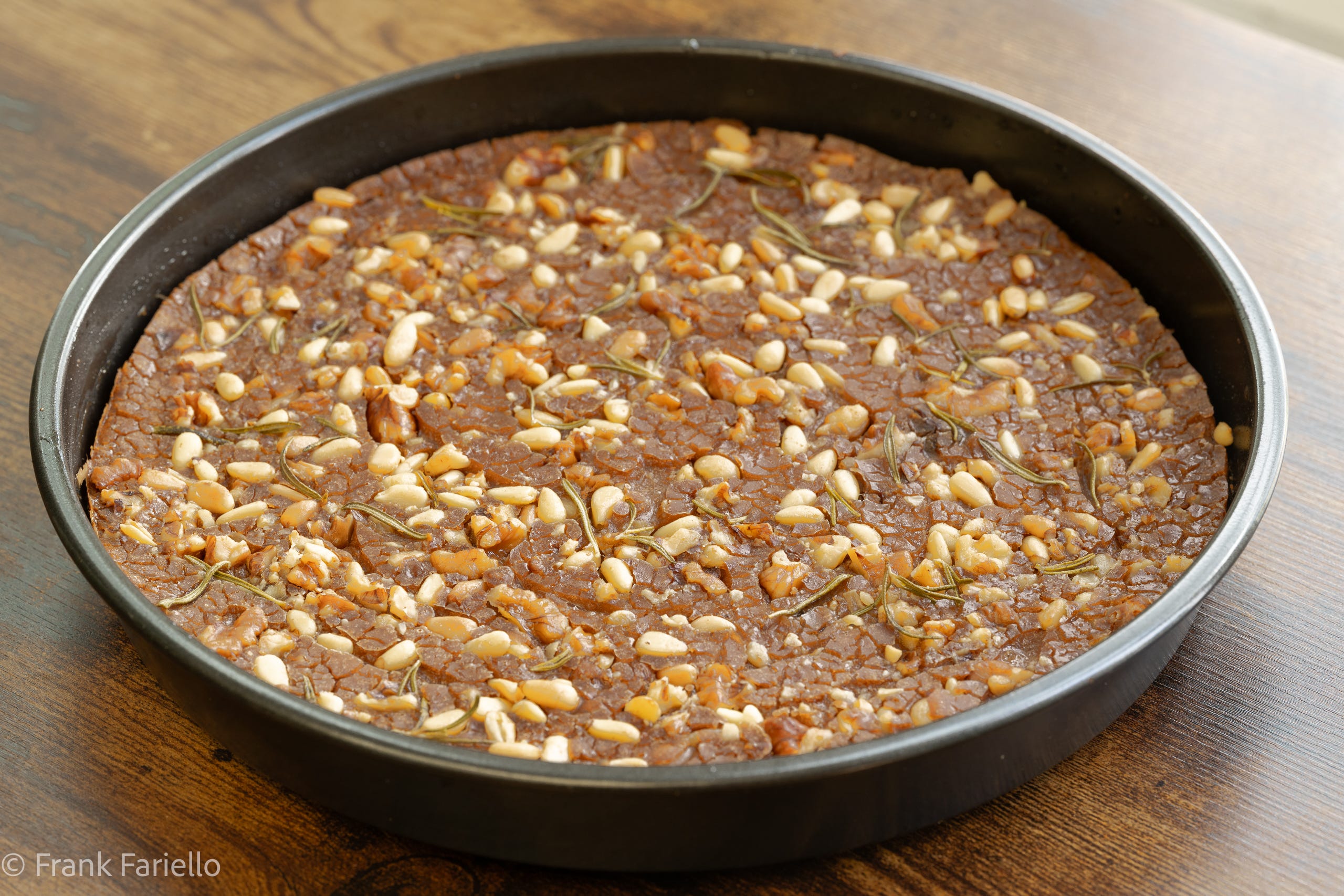
After last week’s recipe for a modern savory main course with surprising sweet notes, this week we have a dessert with savory notes: castagnaccio, a chestnut ‘cake’ with its origins in 16th century Tuscany.
Once called il pane dei poveri, or ‘the bread of the poor’, the batter for castagnaccio is basically just chestnut flour and water, along with a handful of dried fruits and nuts thrown in. No sugar, no eggs. This simple batter is baked in a moderate oven topped with—surprise!—rosemary leaves and a drizzle of olive oil. This is a dolce that relies purely on the inherent sweetness in the chestnut flour and dried fruit, as well as an optional drizzle of sweet vinsanto, the classic Tuscan dessert wine.
The result is astonishingly good. Intensely nutty and only slightly sweet, castagnacio has a wonderful mouth feel, a bit crisp on top but, if properly baked, moist and chewy on the inside. It’s not really much like a cake, to be honest, though that’s the way it’s usually translated into English.
The texture reminds me of Liguria’s farinata genovese, but the flavor profile is more remiscent of another classic Tuscan dessert schiacciata all’uva, a kind of grape foccacia which also blends a sweet note from the grapes with savory ones from olive oil and rosemary.
Nothing exemplifies Tuscan simplicity better than this lovely dessert. No wonder it’s become popular all over Italy, giving birth to all manner of regional and local iterations. For some castagnaccio is an acquired taste, but if like me you enjoy desserts that aren’t too sweet, this one’s for you.
Substack Live tomorrow!
As announced last week, tomorrow I’ll be joined by Giovanna Solimando of My Half Apulian Table for another Substack Live, part of our ongoing series on the challenges of preparing Italian dishes outside Italy.
Having covered Italian pantry items and cookware in our previous Lives, this time Giovanna and I will be talking about Italian fruits and vegetables. If you ask me, this is probably the most important topic of them all. There’s nothing that defines the food of Italy more than its exquisite fresh produce. And there’s nothing I miss more from my years living in Rome.
Giovanna and I will be comparing notes on the fruits and vegetables we miss the most, where we source them them here in the US if we can, and what we use as substitutes if we can’t. We’ll be sharing our favorite ways of preparing them. And we’ll also be discussing how sometimes what supposedly is same product looks, tastes and cooks very differently on each side of the Atlantic—and how to adjust your recipes accordingly.
The Live will take place tomorrow, Sunday, November 16, at 1pm EST (New York/DC/Miami) and 7 pm CET (Rome). That’s 10am PST (Los Angeles/Seattle), 11am MST (Denver/Phoenix), 12noon CST (Chicago/New Orleans). And 6pm GMT (London/Madrid). And for any hearty folks Down Under who might want to connect, that’s 5am AWST (Sydney) and 7am (Wellington).
Click below when it’s time:
You might also like…
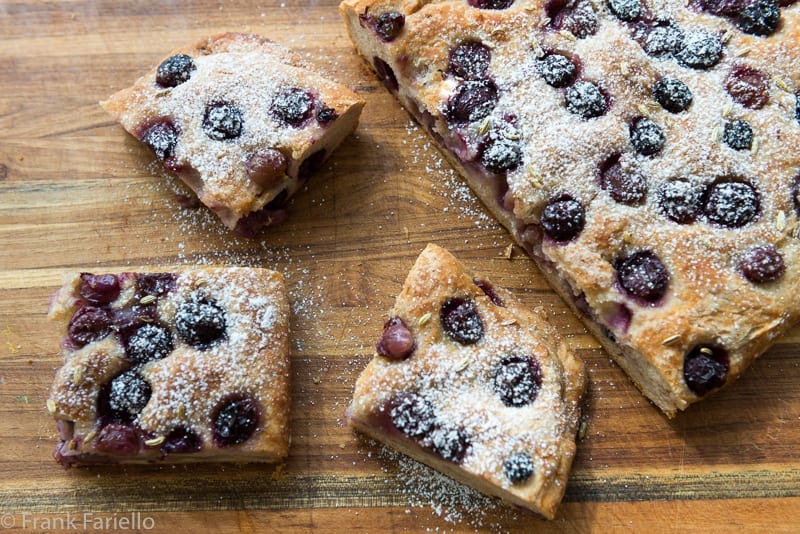
Schiacciata all’uva (Tuscan Grape Focaccia)
No one understands simplicity quite like the Tuscans. As Leonardo da Vinci famously said, “Simplicity is the ultimate sophistication”. This rustic Grape Focaccia, which they call Schiacciata all’uva, is a case in point.
Almost austere in its simplicity, the result is nevertheless both beautiful and—if your ingredients are topnotch—unfailingly delicious. Traditionally prepared during the vendemmia, or wine grape harvest, with grapes that would otherwise be discarded, schiacciata all’uva is made by layering grapes between and on top of two thin sheets of bread dough, and seasoning everything with sugar and olive oil, and sometimes rosemary or anise seed.
The use of some savory elements like olive oil and rosemary in a sweet dish may strike you as odd, but like this week’s featured dish castagnaccio, it actually works, and gives the dish its unique character.
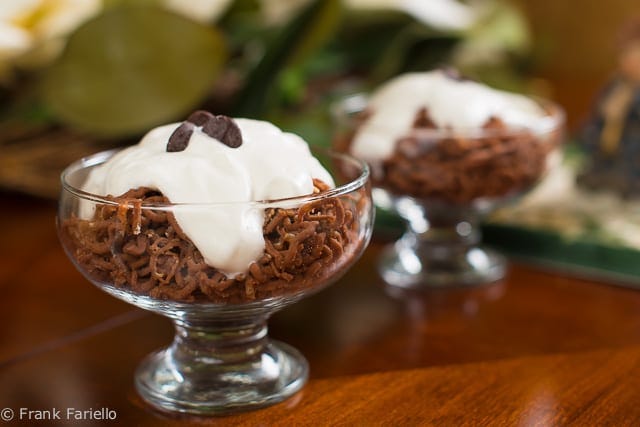
Montebianco (Mont-blanc)
Montebianco—which most English speakers know by its French name Mont-blanc even if the dish originated in Italy—is another delicious way to enjoy the nutty flavor of chestnuts. It’s elegant dessert often served for Christmas, but, to my mind, it is a perfect conclusion to any festive occasion in the late autumn or winter.
Named after the highest peak of the Alps straddling the border between France and Italy, Montebianco is simply a mound of puréed chestnut perfumed with cocoa and other flavorings and topped with whipped cream, a veritable mountain of sweet deliciousness. And it’s rather easy to make once you’ve prepared the chestnuts, so if you buy prepared chestnuts at the supermarket, you can whip this up in no time.
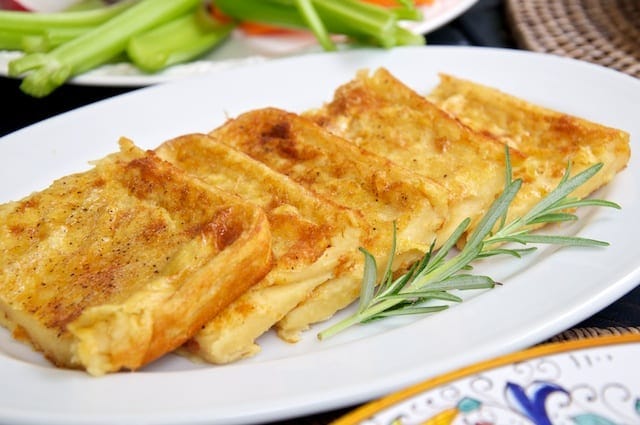
Farinata genovese (Genovese Chickpea Flatbread)
It’s not a dessert, but I had to mention this delicious chickpeas flatbread, one of the most iconic dishes of Ligurian cuisine. Just as typical of the region as pesto genovese, it deserves to be better known.
Farinata has a wonderful, mildly nutty flavor that marries well with just about anything you want to serve it with, but it is perfectly delicious on its own, as an antipasto or snack. And it is really easy and (not counting the initial ‘rest’ for the batter) quick to make, in much the same way as castagnaccio. And once you’ve mastered the basic recipe, you can dress it up in myriad ways. What’s not to like?
Chestnut flour is on my shopping list!
Looking forward to it, Frank. And I’d love some of that castagnaccio e Mont Blanc (and everything else, really).