
Macarronada
Brazil's most popular contribution to pasta cookery

Long time readers will know about our tradition here on Memorie di Angelina of featuring an Italian-American dish every October, Italian-American Heritage month. Over the years we’ve covered such classics as Spaghetti and Meatballs, Sunday Sauce, Baked Ziti, Stuffed Shells, Chicken Parmesan, Chicken Scarpariello, Chicken Francese, Baked Clams, Lobster Fra Diaolo, Wedding Soup, along with along with some perhaps lesser known regional specialities like San Francisco’s Cioppino and Upstate New Yorks’ Utica Greens.
Well, this year I thought I’d do something a little different and start exploring the cookery of the Italian diaspora outside the United States. And I want to start with a dish from the country with the largest population of Italian descent in the world outside Italy itself: Brazil’s macarronada.
THE ITALIAN DISPORA IN BRAZIL
Now if you’re like me, you may have thought—or rather just assumed—that the United States was the country with the largest number Italian descendants outside Italy. Not so. In fact, the US is third with 18,000,000 Italian-Americans, behind Brazil with 32,000,000 italo brasileiros and Argentina with 25,000,000 italo-argentinos. (If you count percentage of the population, Argentina takes the prize with over 60% of its total population having Italian heritage.)
I have to confess I had no idea the Italian diaspora in Brazil was so large. I actually lived in Brazil for a short while during college, having studied for a semester at the Pontifícia Universidade Catôlica do Rio de Janeiro. But I don’t recall running into many Italians, nor do I recall eating much Italian food as such, though as a penurious student I ate my fair share of pasta, much to the amusement of my Brazilian roommates. And I do remember a particularly delicious plate of gnocchi I had at a friend’s parents’ house.
If I didn’t run into many italo brasileiros in Rio, maybe that’s because Italian immigrants mostly settled further south, in the states of São Paolo, Rio Grande du Sul and Minas Gerais. (Interesting factoid: São Paolo has the largest Italian population of any city in the world.) In common with a number of other Latin American countries, Italian immigration to Brazil came primarily from Northern Italy in the late 19th century. The pattern shifted, however, to southern Italians in the early 20th century.
MACARRONADA
As in the United States, Italian immigration has influenced Brazilian cookery significantly, and not just among the italo brasileiros. My roommates' ribbing notwithstanding, macarrão (pasta) has become very popular among Brazilians. One of the most iconic Italian influenced Brazilian dishes is today’s featured dish, a pasta dish called macarronada.
What is macarronada? Reminiscing about his childhood growing up as an italo brasileiro in an intriguing academic paper on Italian migration to Brazil and its influence on the country’s cookery, author Willi Freire writes:
As a young kid, I would eat macarronada, which is essentially any pasta mixed with some kind of marinara sauce and protein—many times, it’s a mix of whatever ingredients are left over from the week. Additionally, this dish is symbolic because it represents the working class and is typically served after the culmination of a hard, gruesome week on a Sunday afternoon.
—WILLI FREIRE, “THE EXQUISITE SOCIOHISTORICAL INTERSECTION OF BRASIL AND ITALIA” FROM NOODLES ON THE SILK ROAD
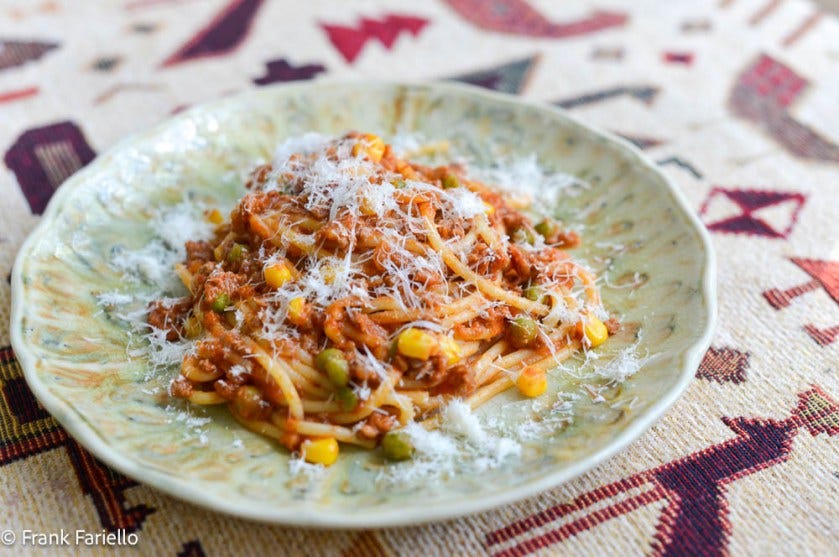
For this post, I dusted off my rusty Portuguese and plunged into the internets. Just as the author describes, you can find a vary array of recipes for macarronada. But perhaps the most iconic of all is the macarronada à bolonhesa, also known as macarronada de carne moída: pasta with a thick meat and tomato sauce much like the good old Spaghetti Bolognese aka “Spag Bol” so popular in the English speaking world.
But where macarronada à bolonhesa parts ways from other similar dishes is the variety of optional ingredients you can add to the sauce while it simmers, from fairly conventional ones like heavy cream, sliced mushrooms or peas to others like olives and corn kernel that would scandalize most Old World Italians. (More about these variations in the Notes below.)
Although the family resemblance is clearly there, an actual ragù alla bolognese this definitely is not. If this dish is any guide, Brazilians would seem even more ready to break Italian culinary conventions than North Americans. That said, like its Anglophone cousin Spaghetti Bolognese, a macarronada has a kind of primal appeal. And if you’re a fan of Spag Bol, it will be agreeably familiar and yet, for my money, even tastier.
You might also like…
Spaghetti and Meatballs
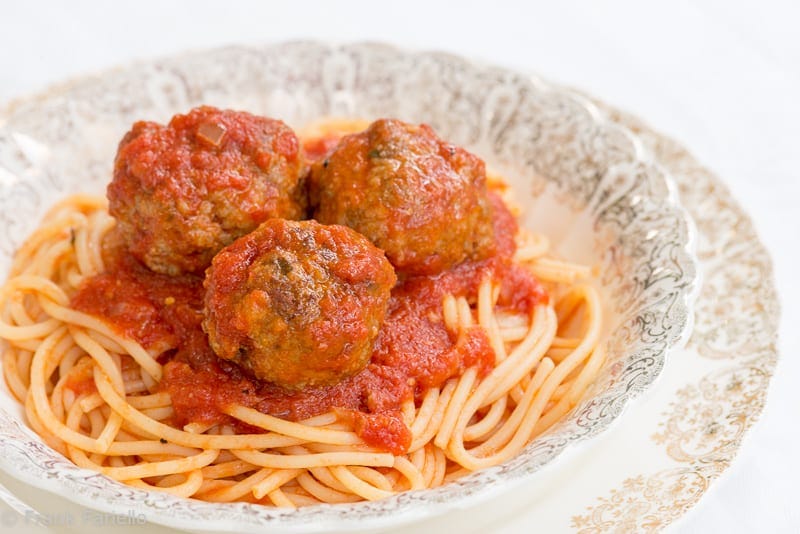
Spaghetti and Meatballs might just be the most famous Italian-American dish of all time, a staple of ‘red sauce joints’ all over the country. It’s so famous, in fact, that it inspired a popular children’s song. Though you’re not likely to find this dish in Italy itself, it’s a classic abroad for a reason.
Stuffed Shells
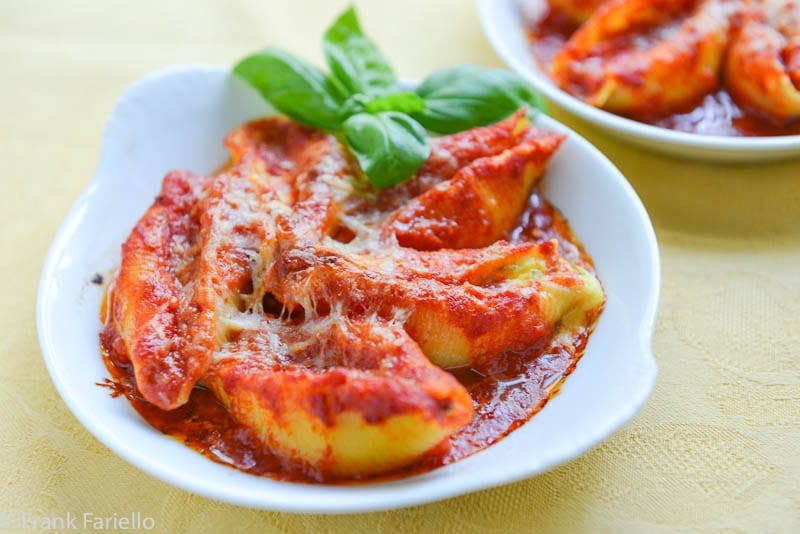
Stuffed Shells weren’t part of my upbringing, but the dish has a special place in the heart (and palates) of many Italian-Americans. As prepared here in the US, Stuffed Shells are, if anything, lighter than their continental Italian counterpart, conchiglioni ripieni al forno. The taste and texture of Stuffed Shells is vaguely reminiscent of lasagna but they’re much easier and quicker to make.
Lobster Fra Diavolo
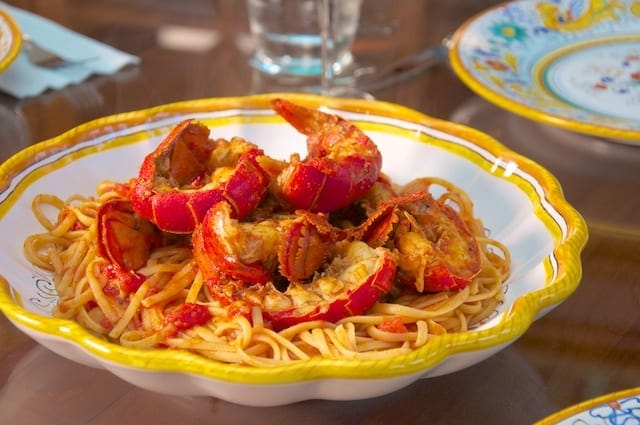
Lobster Fra Diavolo, or “Brother Devil’s Lobster” is a distant cousin to Southern Italian seafood and pasta dishes like spaghetti allo scoglio. Its pairing of what would be, in Italian food culture, a second course with pasta—a kind of seafood version of spaghetti and meatballs?—not to mention its combination of seafood with tomato sauce heavily seasoned with prodigious amounts of chopped garlic, oregano and red pepper flakes, gives away the New World origins of this dish. It’s another example of the rough-and-ready exuberance of Italian-American cooking.
Ciao Frank. There is also a very large Italian population in Australia. Thanks for your authentic recipes and your commentary that goes along with them.